A federal appeals court just stopped President Trump from reshaping how nearly half the country votes by mail, and the reason cuts to the heart of who really runs American elections.
Story Snapshot
- A First Circuit appeals panel kept in place a block on Trump’s mail‑in voting order in 23 states
- The executive order would have built a federal “eligible voter” list and tied mail ballots to that list
- Judges said the Constitution gives election control to states and Congress, not the President
- The case shows courts drawing a line between election security and executive overreach
Appeals court freezes Trump’s voter list plan in nearly half the states
Judges on the United States Court of Appeals for the First Circuit upheld a lower court ruling that blocked President Trump’s executive order aimed at tightening mail‑in voting rules in 23 states ahead of the midterm elections.
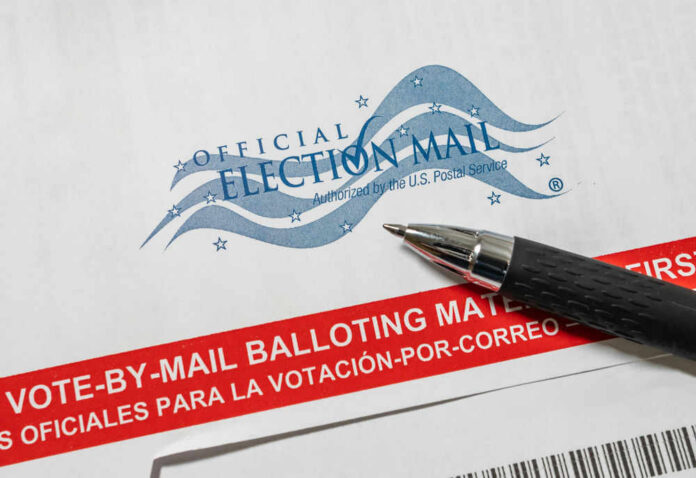
The order would have created a national list of “eligible voters” and limited delivery of mail ballots to people on that list, reaching nearly half of all states. The panel rejected the administration’s bid to move forward, keeping the injunction in place as the case continues.
A U.S. appellate court on Saturday upheld a federal ruling that, in nearly half of all states, blocked President Trump's executive order to create a list of eligible voters and limit the delivery of mail ballots to people on that list. https://t.co/Kp0DGk1EZl
— CBS News (@CBSNews) July 26, 2026
The lawsuit was brought by a group of mostly Democratic‑led states, which argued the order was unconstitutional and would disrupt their upcoming elections. These states said they faced looming deadlines and had “no practical choice” but to respond, because the order forced them to coordinate quickly with federal officials and change voting procedures before September and November contests.
The First Circuit agreed that the threat was real and current, not hypothetical, and refused to pause the district court’s block while the appeal goes forward.
What the blocked order tried to do to mail voting
The executive order at the center of the case did not simply encourage cleaner voter rolls; it directed federal agencies to help create a centralized list of eligible voters and to link mail ballot access to that list.
In practice, that would have meant federal agencies verifying citizenship and registration data that states normally manage, then limiting mail ballots to those the list identified. State plaintiffs warned that errors, mismatched records, and tight timelines could keep lawful voters from receiving ballots in time.
Reporting on the underlying district court ruling shows that the judge saw this as more than a simple administrative tweak. The order’s deadlines and demands would have forced state election officials to retool systems and retrain workers, while they were already preparing for high‑stakes midterms.
The appeals court echoed that concern, warning that rushed changes risk confusion and could disenfranchise eligible voters if implemented so close to an election. That harm to voters weighed heavily against letting the order take effect now.
Constitutional lines: who controls elections, and who does not
At the core of the ruling is a simple constitutional idea: the President does not run elections. The First Circuit pointed to the fact that, under the Constitution, state and local officials administer federal elections, subject to rules set by Congress.
President Trump’s order, the court wrote, “mandates unprecedented levels of federal involvement in the administration of elections by the states,” a level of control the Constitution does not grant the executive branch. That language tracks what the district judge already said: the Constitution gives the President no specific power over elections.
On one hand, many on the right support stronger checks on voter fraud and tighter mail‑in ballot rules. On the other hand, the same limited‑government view says Washington should not simply seize control of election machinery the Constitution clearly leaves to the states and Congress.
Based on the facts, the court’s concern was not about the goal of secure elections but about the tool chosen: a sweeping executive order that jumped over the roles of legislatures and state officials.
How this fits into Trump’s broader election fights
This mail‑voting case is not happening in a vacuum. Trump has pushed legal and political battles on many election fronts, from challenging state results in 2020 to fighting criminal charges for alleged election obstruction.
A separate federal appeals court in Washington, for example, recently said Trump can be prosecuted like any citizen for his attempts to overturn the 2020 election, and that he has no blanket immunity from federal criminal law. That ruling rejected the idea that the executive branch has “carte blanche to violate the rights of individual citizens to vote and to have their votes count.”
At the Supreme Court level, the justices have also signaled that no single actor gets to rewrite election rules alone. In Trump v. Anderson, the Court held that states cannot unilaterally block federal candidates under the “insurrection” clause; Congress holds that enforcement power.
Together with the mail‑voting order case, these decisions draw a pattern: judges are open to arguments for election integrity but are pushing back hard when presidents or states cut around the constitutional roles of legislatures, Congress, and voters themselves.
Political stakes and what comes next
The timing of the First Circuit’s decision adds to the drama. The order was aimed at the very midterm elections that would decide control of Congress, and Trump’s team wanted tighter mail‑in rules in place before November. Supporters framed the order as a needed defense against fraud.
Opponents saw it as a move that would make lawful voting harder, especially for older voters, rural voters, and people who rely on mail ballots.
The court did not say mail‑in voting rules can never change. It said the President cannot do it this way, at this time, with this level of federal control over state election systems. If Congress passes new national standards, or states choose to tighten their own mail‑ballot rules, those fights will have their own legal tests.
For now, though, the message from the appeals court is clear: in America’s system, voters and lawmakers set the rules, and even a sitting President has to stay within the lines.
Sources:
scotusblog.com, supremecourt.gov, apnews.com, abcnews.go.com, pbs.org, reuters.com, foxnews.com