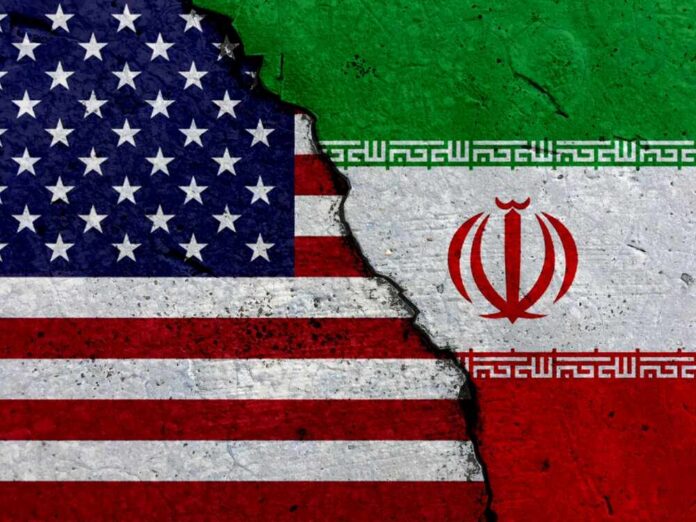
Iran’s Islamic Revolutionary Guard Corps killed two U.S. service members in Jordan on July 17, 2026, and the U.S. military hit back the same night — for the eighth straight night in a row.
Story Snapshot
- Two U.S. troops were killed and one went missing after Iranian ballistic missiles and drones struck Al-Azraq Air Base in Jordan on July 17, 2026.
- U.S. Central Command confirmed the deaths and launched strikes that same night, directly targeting the Islamic Revolutionary Guard Corps (IRGC) units behind the attack.
- It was the eighth straight night of U.S. strikes against Iran and the deadliest day for American forces in the Middle East since March 2026.
- The IRGC publicly claimed the Jordan attack, calling it retaliation for ongoing U.S. strikes on Iranian targets.
Two Americans Dead, One Missing After IRGC Missile and Drone Strike
U.S. Central Command (CENTCOM) confirmed on Saturday, July 18, that two service members were killed and one remains missing after Iranian ballistic missiles and drones hit U.S. and partner forces at Al-Azraq Air Base in Jordan the night before.
The IRGC did not hide what it did. It published a statement claiming the strike targeted fighter jet shelters and a large aircraft parking area, saying the attack “completely destroyed” at least two U.S. fighter jets. Both sides agree on the basic facts of what happened.
The U.S. conducted a new round of airstrikes early Monday targeting Iran after announcing the death of another American service member, hitting around a northwestern city believed to be home to underground missile bases. https://t.co/7MSQmyv3Da
— NBC10 Boston (@NBC10Boston) July 20, 2026
The July 17 attack marked the deadliest day for U.S. forces in the region since March 2026, with a total of 16 American troops killed in the broader conflict up to that point.
Iran launched the Jordan strike after what it called a seventh straight night of U.S. bombardment of Iranian military sites. The cycle of strike and counterstrike has been grinding on for weeks, and the deaths of U.S. troops pushed it into a more dangerous phase.
U.S. Hits Back Hard, Targeting the Exact IRGC Units That Fired
The U.S. response was fast and deliberate. CENTCOM said American forces struck Iranian military coastal surveillance and air defense facilities, maritime capabilities, and missile and drone storage sites. Critically, the statement added that U.S. assets “targeted Islamic Revolutionary Guard Corps forces that launched attacks against U.S. service members in Jordan on July 17.”
The strikes were described as designed to “swiftly punish” the IRGC and further degrade Iran’s ability to threaten commercial shipping in the Strait of Hormuz.
The U.S. military hit roughly 140 Iranian military targets in earlier rounds of this conflict. The pace and scale of these strikes signal something beyond a warning shot.
When American troops come home in body bags, the response has to be visible and painful — that is not just strategy, it is a basic obligation to the men and women in uniform. The Trump administration appears to understand that clearly.
The IRGC’s Escalation Logic and What It Means Going Forward
The Islamic Revolutionary Guard Corps operates on three core principles: controlled escalation, proxy warfare, and asymmetric retaliation. Hitting a U.S. air base directly with ballistic missiles is a step beyond proxy attacks.
Between October 2023 and February 2024, there were 190 attacks on U.S. bases in Syria and Iraq, most carried out by Iran-backed militias. Now the IRGC is striking directly and claiming it openly. That shift matters enormously.
Iran has fired over 500 ballistic missiles and 2,000 drones since late February 2026 against U.S. and allied targets in the region. The IRGC has also struck U.S. bases in Kuwait and Bahrain and claimed attacks on Qatar’s Al Udeid Air Base.
Each round of strikes brings both sides closer to a threshold where miscalculation stops being a risk and becomes a reality. An interim deal seeking to end the conflict was reportedly in progress, but the killing of U.S. troops has complicated any near-term off-ramp.
What Comes Next in a War Neither Side Has Officially Declared
The United States and Iran are engaged in direct, sustained military combat. No one has formally declared war, but the facts on the ground tell a different story. American service members are dying from Iranian missiles fired by Iranian soldiers. The U.S. is striking Iran on consecutive nights with precision weapons. Jordan’s air defenses are intercepting Iranian missiles over Jordanian skies.
The Gulf region is a live battlefield, and the missing U.S. service member from the July 17 attack is a reminder that the human cost is still unfolding. The next move by either side will define how far this goes.
Sources:
apnews.com, usatoday.com, irishtimes.com, en.mehrnews.com, washingtonexaminer.com, caliber.az, english.news.cn, youtube.com, timesofisrael.com, reuters.com, axios.com, facebook.com, cbsnews.com, middleeasteye.net, cnn.com, en.wikipedia.org, wane.com, eagleintelreports.com, dawn.com, timesofindia.indiatimes.com, en.webangah.ir, iz.ru, theweek.in, instagram.com, state.gov, criticalthreats.org, cptik.org, omranstudies.org, csis.org, mwi.westpoint.edu, hstoday.us, securityscorecard.com, engelsbergideas.com, understandingwar.org