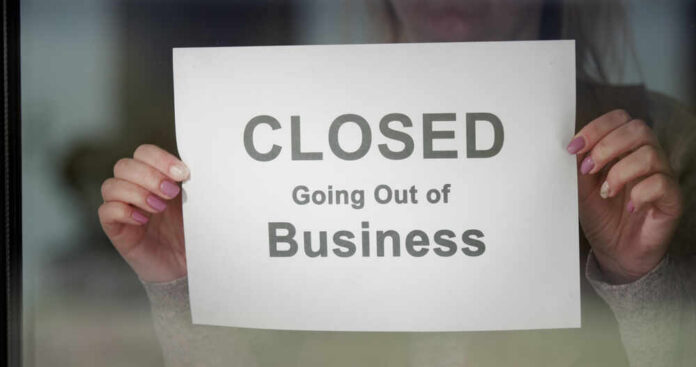
A once-fast growing take-and-bake pizza chain is now shutting dozens of its own stores after a costly turnaround bet backfired.
Story Snapshot
- MTY Food Group will close 68 underperforming corporate-owned restaurants, including 45–50 Papa Murphy’s locations, over the next six to nine months.
- These restaurants lost more than $10 million in the past year, forcing MTY to cut its losses and refocus on stronger units.
- Papa Murphy’s has already closed about 150 locations over the past two years, revealing deep problems with the brand’s economics.
- MTY is paying an estimated $10–$12 million up front to terminate leases and exit these sites, trading short-term pain for long-term survival.
A turnaround bet that never paid off
MTY Food Group bought Papa Murphy’s for about 190 million United States dollars in 2019, aiming to fix a struggling but familiar pizza name.
Management later converted many franchise locations into corporate-owned stores, hoping tighter control and new systems would improve results. That bet did not work.
On the latest earnings call, MTY’s chief executive officer Eric Lefebvre said Papa Murphy’s has been “struggling more than our other brands as of recent,” and the corporate segment’s profit plunged.
Corporate profit across Papa Murphy’s and related units fell from 11.3 million dollars to 5.7 million dollars, while corporate revenue dropped 15 percent to 111.7 million dollars. Those numbers show the turnaround moved the brand in the wrong direction, not the right one.
Papa Murphy’s to close 50 restaurants over declining sales https://t.co/VxO3U513jo
— KFOR (@kfor) July 14, 2026
Lefebvre told investors the company will now close 68 poorly performing corporate-owned restaurants over the next six to nine months, including roughly 45 to 50 Papa Murphy’s units. These sites, spread across several banners, lost more than 10 million dollars combined in the last 12 months and continued to slide.
MTY expects to spend 10 to 12 million dollars up front to terminate leases and shut these doors, a painful but targeted move meant to stop further annual losses.
Sales slump meets a shaky business model
Same-store sales across MTY fell 2.1 percent, with declines in both the United States and Canada, indicating broader market weakness. Still, Papa Murphy’s stands out.
The brand sells “take-and-bake” pizzas that customers cook at home, a concept that made sense when budgets were tight and home ovens were central to the home.
Today, pizza buyers face endless delivery deals and loyalty apps from large chains. Lefebvre himself admitted there is “very little loyalty” in pizza and that customers chase the cheapest deal at any given time.
When value-minded customers can hit a button and get hot pizza brought to their door, a trip to pick up cold dough and toppings becomes a tougher sell.
The numbers show the strain. Papa Murphy’s has about 1,000 units but has shuttered a large share of its footprint in just a few years. Reports indicate the chain closed 43 locations in 2023 and about 100 more in 2024, mainly franchise outlets. Now MTY is adding up to 50 corporate closures on top of those cuts.
This pattern fits a wider trend: many restaurant turnarounds fail when new owners misread local conditions and compress unit economics, especially in a high-cost era.
Food and labor costs remain high, debt from the pandemic years is coming due, and traffic has softened. When each store’s profit margin shrinks, marginal concepts with weak loyalty feel the squeeze first.
The franchise-to-corporate trap and why it matters
MTY’s choice to convert franchise locations into corporate stores for Papa Murphy’s is important. Franchise owners have local skin in the game. They often work long hours, watch costs closely, and adjust to their neighborhood.
When a far-off parent company takes direct control, it sometimes gains brand control but loses that ground-level hustle. Research on restaurant failures shows franchise chains fail nearly as often as independent operators over time, and outside owners rarely have a magic formula.
In this case, MTY took on more risk and higher operating costs just as the category declined, and the move backfired.
One of the largest pizza chains in the country is preparing to close up to 50 Papa Murphy’s locations as its parent company, MTY Food Group, eliminates underperforming restaurants while it works through a “challenging period” for the business. https://t.co/gxZrOff70F
— KIRO Newsradio 97.3 FM🎙 (@KIRONewsradio) July 13, 2026
MTY has not broken out detailed Papa Murphy’s-only financials, so investors cannot see the exact loss tied to this brand alone. The $ 10 million loss figure covers all 68 underperforming stores across multiple banners. Even so, Lefebvre’s comments and the store mix make clear Papa Murphy’s is a main driver of the problem, not a bit player.
For shareholders focused on steady cash flow, this is a textbook lesson: owning more of a weak business does not fix it, and central planning cannot fully replace hungry local owners.
What happens next for Papa Murphy’s and its customers
The closures roll out over six to nine months, with the first wave starting in mid-July. Many will be in states where Papa Murphy’s once covered suburban strip malls. Some customers will simply switch to other pizza chains. Others may lose a budget-friendly dinner option they relied on.
Lefebvre argues that focusing resources on stronger markets and stores will protect the brand’s long-term viability.
He also said he does not expect closures on the same huge scale going forward. That sounds like a pledge to stabilize rather than keep shrinking.
Whether that happens will depend on hard choices, not press quotes. Papa Murphy’s must prove its take-and-bake idea still fits how real families eat and spend. It must win on clear value, simple menus, and local execution, not just corporate deals.
For those who value disciplined use of capital and accountability, this episode underscores a simple truth: markets punish wishful thinking.
MTY paid dearly to learn that you cannot fix a weak unit model by owning more of it. You fix it by making every remaining store truly worth the customer’s drive.
Sources:
foxbusiness.com, investing.com, youtube.com, finance.yahoo.com, ground.news, scanx.trade, tradingview.com, restaurantdive.com, nasdaq.com, chrie.org