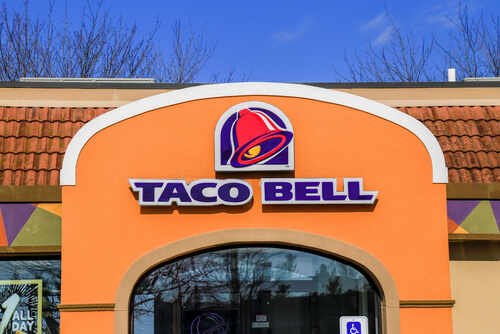
A parasite tied to “explosive” diarrhea has turned Taco Bell’s lettuce into the latest battleground between public health detectives and fast-food America.
Story Snapshot
- Federal health officials are probing Taco Bell as they hunt the source of a massive cyclosporiasis outbreak.
- Michigan cases have exploded into the thousands, and lettuce and salad greens now top the suspect list.
- Taco Bell denies any confirmed link and says it pulled ingredients voluntarily, as a precaution.
- The fight over blame exposes how modern food chains, media, and regulators collide when outbreaks hit.
How Taco Bell Ended Up In The Crosshairs
Federal and state investigators are digging into whether Taco Bell played a role in one of the largest known outbreaks of cyclosporiasis, a stomach illness caused by the Cyclospora parasite that contaminates fresh produce.
Reports based on unnamed sources say officials are looking closely at lettuce served in the chain’s restaurants, especially in the Midwest. Several Taco Bell locations in Michigan have stopped selling lettuce, cilantro, pico de gallo, and guacamole while investigators run traceback checks on their supply chain.
The Centers for Disease Control and Prevention (CDC) reported more than 1,600 lab-confirmed U.S. cases since May, spread across 34 states. Michigan alone has logged about 3,300 cases since late June, a huge spike compared with typical years.
This scale, and the pattern of where people ate, led federal and state teams to focus on common food exposures. Interview data from sick patients kept circling back to lettuce and salad greens, raising red flags for investigators and for any chain that serves them at high volume.
What We Know About The Likely Source — And What We Don’t
Michigan’s chief medical executive, Dr. Natasha Bagdasarian, says early case interviews point to lettuce or salad greens as “a common product that regularly comes up” when they talk to patients. That does not mean one farm or one shipment has been nailed yet.
Investigators openly admit they have not identified a specific grower, producer, or supplier. Past outbreaks of Cyclospora have repeatedly been traced to fresh produce, including cilantro, basil, leafy greens, berries, and bagged salads.
Federal outbreak playbooks lean on three types of evidence: patterns in who got sick and what they ate, traceback records of where foods came from, and lab tests on food and the environment. In many prior Cyclospora outbreaks, epidemiology pointed squarely at produce, but traceback and testing never found one neat smoking gun.
The current investigation fits that pattern. Lettuce and greens are the top suspects, the parasite almost certainly hit before the food reached the restaurant, and a complex supply chain makes final proof hard.
Taco Bell’s Defense And The Information Gap
Taco Bell says public health officials “have not confirmed a link to Taco Bell or any specific ingredient, supplier, restaurant or retailer,” and stresses that its ingredient removals are voluntary and precautionary. So far, the Food and Drug Administration (FDA) has not announced a recall that names Taco Bell.
There is no public FDA notice tying the chain to the outbreak, and federal officials have declined on press calls to confirm whether Taco Bell, or any specific vendor, is formally under investigation.
From a common-sense view, that matters. Anonymous leaks to big outlets like The Washington Post can move markets overnight, while official agencies stay vague. Yum Brands, Taco Bell’s parent company, saw its stock drop after the first report said lettuce served at Taco Bell may be associated with the outbreak.
That kind of market shock creates pressure to “find” a culprit fast, sometimes before hard lab data catches up. Skeptical readers are right to ask for named sources, clear statistics, and transparent methods before they accept blame for one company.
Why Fast Food Chains Keep Getting Pulled Into Produce Outbreaks
This story fits a familiar pattern: a large national chain, a microscopic germ, and vegetables that pass through many hands before reaching your taco. In the 2006 Escherichia coli outbreak tied to Taco Bell, shredded lettuce was “the most likely source” based on case-control studies and distribution patterns.
Other outbreaks have linked national chains to contaminated tomatoes, leafy greens, or cilantro that were already dirty before they arrived. The chain is the stage, not always the original villain.
Cyclospora is having the worst year in American history. 7,000 cases….34 states. 0 answers
CDC counts 1,645 cases. Michigan alone counts 3,309 cases
Taco Bell pulled lettuce but nothing's confirmed….cases currently include people who never ate there.
Restaurants eat the…
— Mike Kudrna (@MichaelKudrna) July 15, 2026
Modern food systems move huge volumes of produce across states and borders. When something goes wrong upstream, chains that serve millions of meals a week become the visible face of the problem. Regulators have a duty to act fast to protect the public, but their early moves often rest on interviews and probability, not conclusive lab proof.
That gap fuels both media headlines and public mistrust. People see ingredients vanish from menus and assume guilt, while agencies speak in cautious, technical language that leaves room for doubt.
What This Investigation Reveals About Risk, Responsibility, And Trust
The Michigan surge in cyclosporiasis, and the national case count, show how fragile safety becomes when one contaminated batch of produce gets wide distribution. Lettuce is cheap, light, and used everywhere, which makes it a perfect vehicle for spread and a nightmare to track.
Health officials must warn the public based on the best available evidence, even when they cannot yet name the exact farm or shipment. That is why they are flagging lettuce and salad greens while still saying “we do not have a definite product identified.”
On the other side, businesses and customers deserve due process. Previous fast-food outbreaks prove that chains can be clearly linked when the data support it. They also prove that sometimes the food category is known, but no single brand or supplier can be nailed down.
The fairest posture is simple: insist on transparent evidence, hold any proven bad actor accountable, demand better oversight of imported produce, and resist trial by hashtag before the science is done. For now, Taco Bell is under investigation, lettuce is the prime suspect, and the final verdict is not in.
Sources:
townhall.com, washingtonpost.com, reuters.com, businessinsider.com, cdc.gov, youtube.com, nbcnews.com, facebook.com, canada.ca, cambridge.org, d-nb.info, pmc.ncbi.nlm.nih.gov, fda.gov