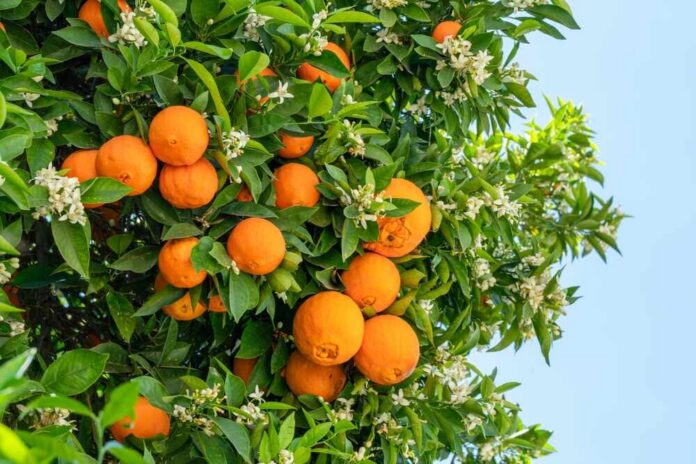
Florida’s worst drought in 25 years is squeezing America’s orange supply at the exact moment growers are already battling a tree-killing disease and skyrocketing irrigation costs.
Story Snapshot
- U.S. Drought Monitor data shows 100% of Florida in drought, with more than 75% in extreme drought conditions.
- Florida produces roughly 17–20% of U.S. citrus, so that disruptions can ripple into grocery prices and juice supply.
- Citrus acreage has collapsed from over 800,000 acres in 2000 to roughly 200,000 acres today due to greening disease, hurricanes, and freezes.
- Growers say irrigation during bloom is essential, but diesel and electricity costs are making water dramatically more expensive.
- Some producers are turning to “Citrus Under Protective Screens” (CUPS) to control water use and reduce exposure to disease.
Statewide drought turns irrigation into a make-or-break expense
Florida groves entered 2026 facing a weather reality growers can’t vote away: statewide drought coverage and a large share of the state classified as extreme drought.
Citrus trees need consistent moisture, especially during bloom, and that requirement conflicts with the higher fuel and power costs of pumping and moving water.
In practice, drought doesn’t just reduce yield—it raises the cost of every box that survives, tightening margins for family operations and co-ops alike.
Central Florida communities that depend on citrus feel this quickly because the crop is not a side hustle—it supports packing houses, trucking, equipment suppliers, and seasonal labor.
Reports from the Dundee Citrus Growers Association describe citrus as an economic “lifeline.” That framing matches what longtime Floridians have watched happen in other farm regions: when groves shrink, the whole local economy contracts. With drought stretching across the state, there is no easy “move production north” option inside Florida.
Greening disease and storms already shrank the industry—drought adds a new choke point
Florida’s citrus footprint has been declining for years, and the timeline matters. Around 2000, acreage topped 800,000 acres, but in recent years it had dropped to roughly 200,000 acres.
Citrus greening disease, first detected in 2005, is widely regarded as the primary driver because it damages trees by blocking nutrient flow, steadily reducing productivity, and killing them over time. Hurricanes and freezes then compounded losses, repeatedly knocking back groves and infrastructure.
Florida drought deepens strain on citrus industry as growers battle costs, disease https://t.co/Qb9YcXjPwd
— FOX Business (@FoxBusiness) March 12, 2026
USDA production snapshots underline why shoppers notice changes. Recent reporting cites mixed movement by fruit type, with lemons showing gains while key categories like grapefruit and oranges trend down.
When supply is already constrained, drought-driven irrigation costs can accelerate decisions to push out old trees, delay replanting, or exit entirely. That is not a talking point; it is how agricultural economics works when input costs climb faster than market prices can realistically compensate.
CUPS technology shows promise, but scaling it is a capital challenge
Dundee Citrus and other growers are testing Citrus Under Protective Screens—essentially screened “pods” that allow more precise irrigation and provide a barrier against some pests associated with greening.
Reports describe roughly 10-acre structures that can produce strong yields, with estimates of 8,000 to 10,000 boxes per pod under favorable management. The appeal is simple: if water is scarce and expensive, controlled delivery can reduce waste while protecting young trees.
The limiting factor is cost and time. Building enclosed structures and installing irrigation systems takes capital that many smaller growers may not have after years of storm damage, disease losses, and tight credit conditions.
Even for larger co-ops, CUPS is not a flip-the-switch solution statewide; it’s a strategic bet that higher upfront spending can stabilize output over time.
For conservatives wary of government-directed “industrial policy,” this is a reminder that private-sector innovation works best when policy at least avoids stacking new regulatory costs onto producers.
What this means for prices—and for constitutional-minded voters watching policy choices
Videos and market reporting have highlighted the consumer-facing outcome: tighter supply can feed higher orange and juice prices, even if some citrus categories perform better than others.
The broader concern for many voters is how the government reacts when a staple industry is under pressure.
Water management, energy costs, and permitting decisions can either help growers adapt or trap them in delay and expense. The research here does not detail new regulations, but it clearly shows input-cost stress where policy decisions still matter.
For the Trump-era policy debate in 2026, the lesson is straightforward: When America wants affordable food, it needs domestic producers who can survive weather shocks without being smothered by red tape or energy policies that inflate pumping and transport costs.
Florida citrus is already fighting disease and storm recovery with a fraction of its former acreage. If drought becomes a regular feature, the industry’s future will hinge on whether growers can afford resilience tools like CUPS and reliable irrigation.
Sources:
Florida drought deepens strain on citrus industry as growers battle costs, disease.
Florida citrus growers battle drought, costs and disease
Florida’s Worst Drought in 25 Years Puts Citrus Industry Under Severe Strain
Florida drought slashes citrus supply: Rising costs and disease squeeze growers