Reigniting urgent questions about public safety, a 28-year-old cyclist’s selfless act to shield a mother and her children from a knife-wielding attacker at a San Francisco train station ended in tragedy.
Story Highlights
- Colden Kimber, 28, was fatally stabbed while protecting a family from an unprovoked attack at a San Francisco Muni station.
- The accused, Sean Collins, has been charged with murder and felony child endangerment, and remains in custody.
- The attack, captured on surveillance and occurring in broad daylight, has sparked renewed calls for transit safety and accountability.
- Community members are mourning Kimber’s heroism while demanding overdue reforms to protect everyday Americans.
Heroism Meets Tragedy at San Francisco Transit Stop
Colden Kimber, a 28-year-old cyclist and San Francisco State University student, lost his life in a violent and senseless attack at a Muni stop in San Francisco’s Ingleside neighborhood.
Kimber was waiting for the K train with his girlfriend when Sean Collins, a 29-year-old man described by witnesses as erratic, began harassing a mother and two children at the stop. Without hesitation, Kimber stepped between Collins and the family to protect them. Collins then stabbed Kimber in the neck.
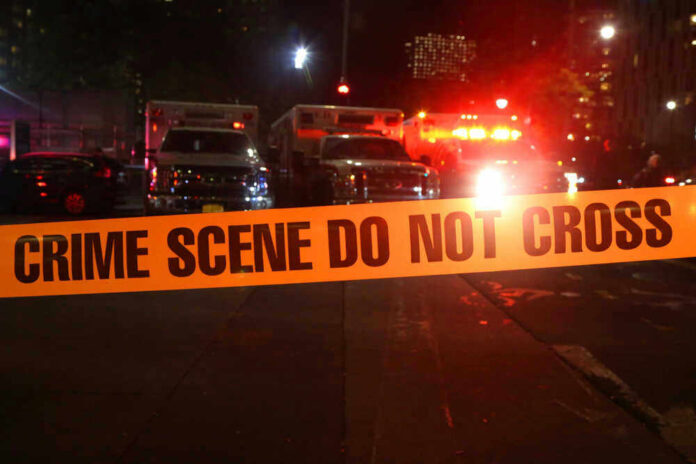
Despite immediate first aid from his girlfriend and rapid emergency response, Kimber later died at the hospital. The entire incident unfolded in broad daylight, with multiple witnesses present, and was captured on security cameras.
Police quickly apprehended Collins near the scene. He now faces charges of murder and felony child endangerment. The San Francisco District Attorney’s office, led by DA Brooke Jenkins, has stated its intention to keep Collins in custody due to the risk he poses to public safety.
The community, meanwhile, reels from a tragedy that could have easily claimed more lives if not for Kimber’s decisive intervention.
Public Outcry: Safety, Justice, and Systemic Failure
The fatal stabbing has reignited deep concerns about public safety on San Francisco’s transit system. The Ingleside neighborhood, a mixed residential area, has dealt with sporadic violence before, but the deadly outcome of this particular incident—where a bystander lost his life protecting strangers—has struck a unique chord.
Violent crime on the city’s Muni system is not new, but the circumstances and heroism involved in this case have drawn sharp criticism of the city’s ability to keep its citizens safe.
Kimber’s actions have been widely recognized as heroic, but his death is being seen by many as a preventable tragedy resulting from years of declining law enforcement presence, leniency toward violent offenders, and inadequate mental health intervention on the streets.
Local authorities are under growing pressure to explain how a known threat could act so brazenly in a public space, and what is being done to prevent similar violence.
The District Attorney’s office has faced scrutiny, with community members and advocacy groups demanding stronger policy and enforcement to deter such attacks. Kimber’s family, particularly his mother, Lara Litchfield-Kimber, has spoken publicly about her son’s character and the need for meaningful action.
Community Response: Mourning and Demands for Change
The loss of Colden Kimber has deeply affected the local community and cycling groups. Tributes have poured in from family, friends, and colleagues, including those at American Cyclery where Kimber worked. A memorial ride is scheduled for September 7, 2025, to honor his memory and raise awareness about the urgent need for safer public spaces.
Kimber was known for his strong sense of justice and commitment to helping others. Community members are describing him as the kind of person America desperately needs more of—courageous, selfless, and willing to protect others even at great personal risk.
The case has also prompted calls for increased security measures throughout San Francisco’s public transit system. Local politicians and city officials have been urged to take immediate steps to address the mental health crisis and criminal behavior that continue to plague public areas.
Legal experts note that the severity of the charges against Collins could set an important precedent for holding attackers accountable, particularly when children are endangered.
For many Americans, especially those who have grown weary of lax governance and leftist policies that prioritize political correctness over safety, this incident is yet another reminder of the urgent need to restore law and order in American cities.
Calls for Accountability and Lasting Reform
The attack on Kimber and the family he protected has sparked a wider debate about the consequences of policy decisions that have left urban spaces vulnerable.
Many in the community point to years of government overreach, misplaced priorities, and a lack of meaningful investment in public safety infrastructure as reasons why such tragedies continue to occur.
Transit safety experts have noted that while attacks like these remain rare, their impact is profound and highlights the need for both preventive measures and support for citizens who step up in moments of crisis. Kimber’s legacy may serve as a catalyst for renewed activism and demands for government accountability.
As the legal proceedings against Sean Collins move forward, with his arraignment postponed to August 14, the city’s residents and leaders are left to reckon with the lessons of this tragedy.
Community voices are uniting around a common goal: ensuring that the heroism displayed by Colden Kimber is not overshadowed by the failures that allowed such a deadly incident to happen. In the coming weeks, memorials and public forums are expected to keep pressure on city officials to deliver real change, because, for too long, American families have paid the price for inaction.